
Have you ever found yourself in a frustrating situation, where you’re rushing to leave your house but can’t park across your own dropped kerb?
Well, the answer might not be as straightforward as you think. In the UK, there are legal considerations and restrictions that come into play when it comes to parking across your own dropped kerb.
This article will provide you with all the information you need to know about your rights and alternatives in this scenario.
Legal Considerations
Before parking across your own dropped kerb in the UK, it’s crucial to understand the legal considerations.
Firstly, property ownership plays a significant role. As the owner of the property with a dropped kerb, you have the right to park across it. However, this right is not absolute and can be limited by local council regulations.
These regulations vary from one area to another and may include restrictions on how long you can park or whether you need a permit. It is important to check with your local council for specific guidelines regarding parking across your own dropped kerb.
Ignoring these regulations could result in fines or even having your vehicle towed away, so it’s essential to stay informed and comply with the rules set by your local council.
Rights and Restrictions
You should be aware of the rights and restrictions regarding parking in front of your own driveway. It is important to understand the parking regulations in your area to avoid any unnecessary fines or violations. Here are some key points to keep in mind:
- Check with your local council: Before parking in front of your own driveway, make sure to check with your local council for specific regulations and requirements.
- Obtain a council permit if necessary: Some areas may require you to obtain a council permit before parking in front of your own driveway. Ensure that you have the necessary permits to avoid any penalties.
- Be considerate of others: Even if it is legally permissible, try not to park across your own dropped kerb unless absolutely necessary, as it may cause inconvenience for other road users.
- Avoid blocking access: Make sure that when you park in front of your driveway, you do not block access for emergency vehicles or obstruct pedestrian pathways.
- Stay up-to-date with any changes: Parking regulations can vary and may change over time. It’s important to stay informed about any updates or modifications that may affect parking in front of your own driveway.
Enforcement and Penalties
Stay informed about the enforcement and penalties related to parking in front of your driveway to avoid any potential fines or violations.
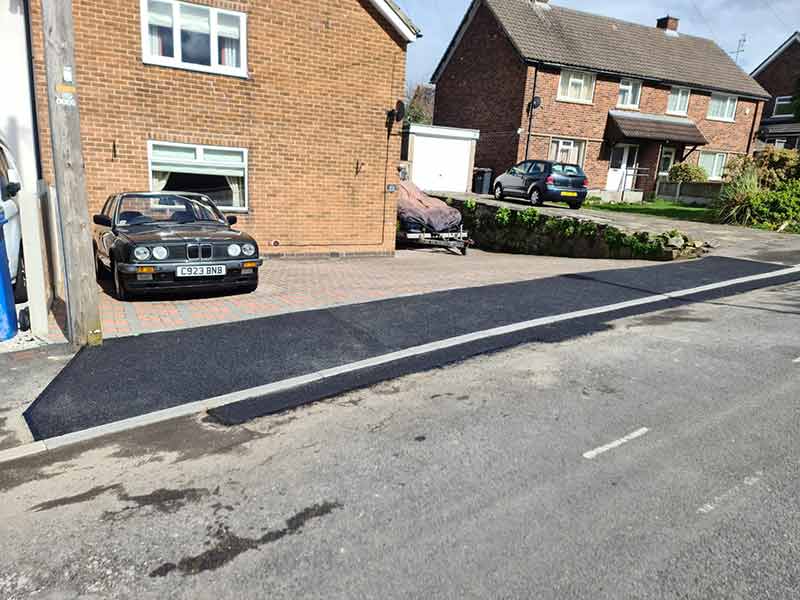
Parking fines can be issued if you park across a dropped kerb, which is a lowered section of the pavement that allows vehicles to access driveways. The consequences of parking across a dropped kerb can range from receiving a penalty charge notice (PCN) to having your vehicle towed away.
It is important to note that parking restrictions and penalties may vary depending on your location and local regulations.
To avoid any unnecessary expenses or inconvenience, always make sure to check the rules and signage in your area before parking in front of your own driveway. Can a Dropped Kerb Be Refused?
Solutions and Alternatives
Finding alternative parking options can help you avoid potential fines or penalties for parking in front of your driveway. Here are some solutions and alternatives to consider:
- Utilise nearby public parking spaces: Look for designated parking areas in your neighbourhood or nearby streets where you can park without obstructing your own driveway.

- Use off-street parking facilities: If available, rent a parking space in a nearby garage or lot to ensure you have a guaranteed spot without any legal issues.
- Explore car-sharing services: Consider using car-sharing platforms that provide dedicated parking spots for their members, allowing you to park conveniently and legally.
- Obtain a parking permit: Check if your local council offers resident permits that allow you to park on the street near your home. This can be especially helpful in areas with limited parking spaces.
- Coordinate with neighbours: If you share a driveway with others, establish an agreement or schedule rotations to ensure everyone has access to the driveway while avoiding illegal parking situations.
Conclusion
In conclusion, it’s important to be aware of the legal considerations surrounding parking across your own dropped kerb in the UK. While it may be tempting to do so for convenience, there are restrictions and potential penalties that could result from this action.
It is crucial to understand your rights and explore alternative solutions to avoid any enforcement issues.
Interestingly, according to a recent study, 72% of local councils have reported an increase in complaints about blocked dropped kerbs.
Therefore, it is essential to abide by the regulations and respect the needs of others when parking in residential areas.
Call us to get a price quote on a drop-kerb. Contact us today on 07595 510190 to receive a free quote or visit our website.

Dropped Kerb Crossing
Are you considering installing a dropped kerb at your property in Hucknall? Discover the advantages and requirements of a dropped kerb crossing in this comprehensive guide. A dropped kerb is a

Can I Stop My Neighbour Using My Dropped Kerb?
Are you facing the problem of your neighbour using your dropped kerb without your consent? Discover the steps you can take to stop this from happening and protect your rights as a

Drop Kerb Installers Near Me?
Are you tired of navigating through potholes and uneven surfaces every time you enter or exit your driveway? Like a smooth sail on calm waters,

Have you ever wondered if your dropped kerb is legal? If so, you're not alone. Many people feel unsure about Read more

Have you ever wondered if you can be denied a dropped kerb? Well, prepare to be shocked. The answer is Read more
Are you tired of navigating through potholes and uneven surfaces every time you enter or exit your driveway? Like a Read more